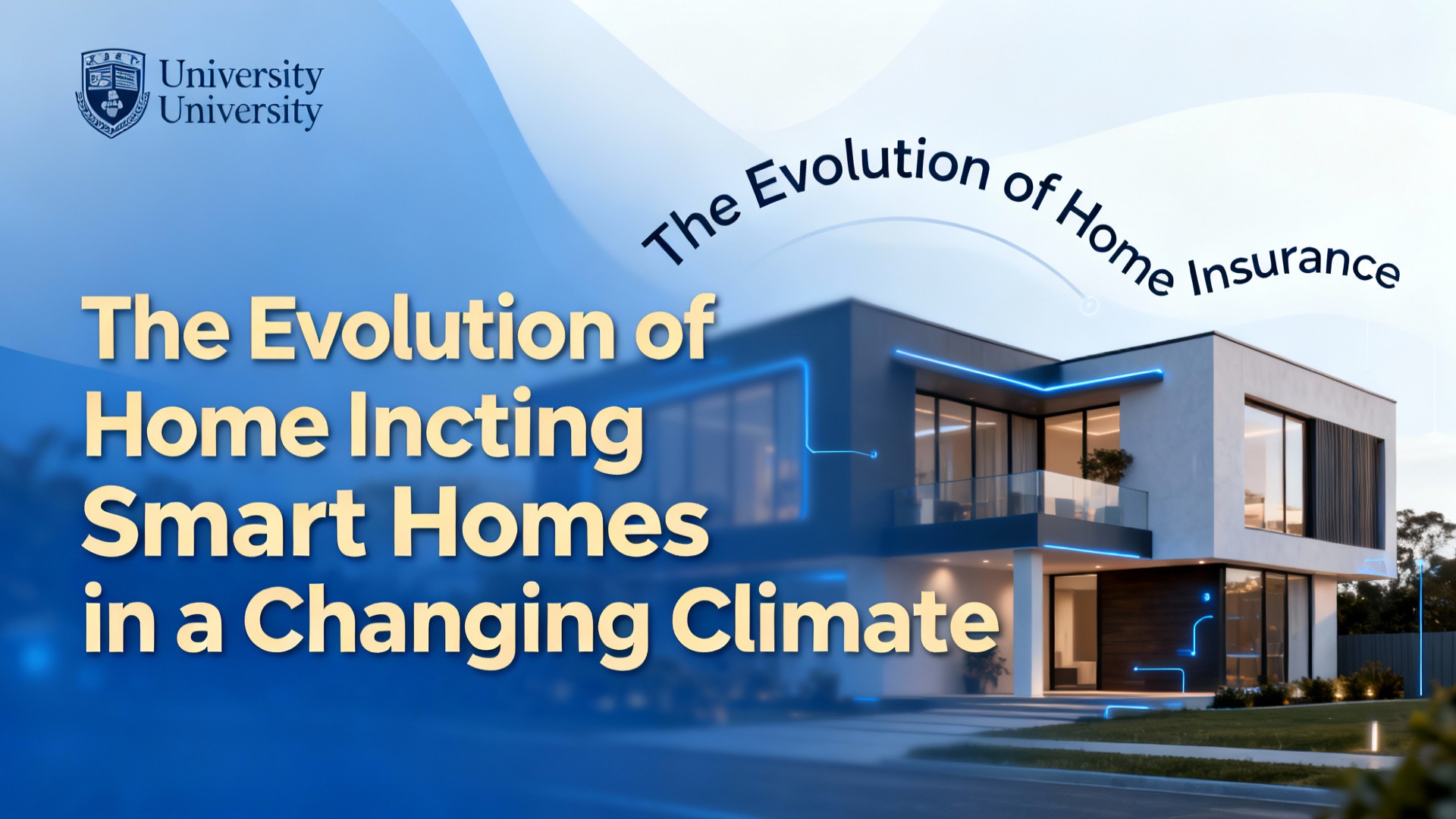
Home insurance has always been about peace of mind—protecting one of life’s most valuable investments from unexpected disasters. For decades, policies covered classic risks such as fire, theft, or natural damage. But the definition of “home” is changing rapidly. Today’s houses are no longer just walls and roofs; they’re interconnected systems of sensors, smart devices, and renewable energy grids.
As climate change accelerates and technology reshapes domestic life, the home-insurance industry faces both new threats and new opportunities. This article explores how insurers are adapting to smart-home innovations, sustainability trends, and growing environmental risks while re-imagining the way protection works in the digital era.
1. From Traditional Coverage to Smart Protection
Classic home insurance was built on broad assumptions. A policy might calculate risk based on the home’s location, construction materials, and age. Claims were processed manually, sometimes taking weeks to settle.
Now, the game has changed. Smart devices—from water-leak sensors to connected smoke detectors—generate real-time data that insurers can use to monitor property health. Instead of reacting after damage occurs, insurers can prevent loss altogether by detecting early warning signs and alerting homeowners instantly.
This shift marks the transition from reactive insurance to proactive protection, where technology helps avoid claims before they happen.
2. Smart Homes: The Digital Watchdogs
Modern smart homes integrate security cameras, motion sensors, temperature regulators, and IoT (Internet of Things) systems. These connected devices can detect fire, flooding, or intrusion in seconds and notify both the homeowner and the insurer.
For example, a smart leak detector under a sink can automatically shut off the water valve when it senses a burst pipe. A connected smoke detector can not only sound an alarm but also trigger a call to the fire department.
Insurers love these systems because they dramatically reduce loss frequency. As a result, many companies now offer discounts or premium reductions for homes equipped with certified smart-security technology.
3. AI-Driven Risk Assessment
Artificial intelligence plays a pivotal role in analyzing risk more accurately than ever before. Traditional assessments relied on historical averages—flood zones, local crime rates, or regional fire statistics.
Today, AI models combine these with real-time inputs such as:
-
Weather satellite data.
-
Property sensor readings.
-
Social-media updates during emergencies.
-
Satellite imagery that measures roof condition or vegetation proximity.
Using this information, insurers can predict potential damage zones during storms, fires, or heatwaves and issue early alerts. In some cases, AI systems even dispatch emergency services before the homeowner realizes the extent of danger.
4. Climate Change and Insurance Volatility
The climate crisis has pushed home-insurance systems to their limits. Rising sea levels, frequent wildfires, hurricanes, and floods are causing record losses. Entire regions, like parts of California and Florida, are becoming increasingly uninsurable due to recurrent catastrophes.
To adapt, insurers are rethinking pricing models and promoting climate-resilient building standards. Some companies reward homeowners for installing impact-resistant windows, elevated foundations, or fire-proof roofing materials.
Governments are also stepping in with public-private partnerships that share climate-related risk, ensuring insurance remains accessible even in high-risk areas.
5. Sustainability and Green-Home Incentives
As the world shifts toward sustainability, home insurers are encouraging eco-friendly upgrades. Many now include “green-rebuild” options that pay extra to replace damaged materials with sustainable ones—solar panels, recycled insulation, or energy-efficient windows.
Policies may also cover home-battery systems that store solar energy, helping reduce dependence on fossil fuels. Some insurers even offer discounts for homes with certified low carbon footprints.
The future of home insurance is tied not just to safety, but to sustainability—rewarding those who help protect the planet.
6. Cybersecurity: The Hidden Threat of Smart Homes
While smart homes offer convenience and safety, they also introduce new risks—cyberattacks. Hackers can potentially access connected devices, disable alarms, or even manipulate thermostats and cameras.
Recognizing this, insurers now offer cyber-home insurance, a new class of policy that covers financial losses caused by digital intrusions. Coverage may include costs related to data theft, ransomware attacks, and identity fraud arising from compromised home networks.
AI-based monitoring systems help detect unusual network activity early, alerting homeowners before hackers can cause serious harm.
7. Drones and Remote Inspection
The use of drones in home-insurance assessment has skyrocketed. Instead of sending inspectors physically after a storm, insurers can deploy drones to capture high-resolution images of rooftops, structures, and surrounding areas.
This allows for:
-
Faster claim validation.
-
More accurate loss estimation.
-
Safer inspections in disaster zones.
Combined with AI image recognition, drones can automatically detect damaged tiles, cracks, or water accumulation—cutting claim processing times from weeks to hours.
8. Data Privacy and Ethical Concerns
With smart devices constantly collecting information, privacy becomes a serious concern. Homeowners may feel uneasy about insurers having access to data from cameras, thermostats, or door locks.
To maintain trust, insurers must implement strict data-governance frameworks. Customers should be able to control what data is shared and how it’s used. Transparency is crucial; otherwise, convenience could come at the cost of personal privacy.
Many countries are now updating regulations to protect consumer rights in the age of connected homes, ensuring insurers comply with ethical AI standards.
9. Claims Automation and Real-Time Settlements
One of the most exciting innovations in home insurance is automated claim settlement. Through AI-driven systems, insurers can instantly verify damage, estimate costs, and issue digital payments.
Imagine a scenario where a tree falls on your roof. Your smart camera records the event, the data is sent to your insurer, and within minutes you receive a payment confirmation. That’s no longer science fiction—it’s happening in pilot programs across the U.S., Japan, and Europe.
Blockchain technology further enhances this by recording every step transparently, reducing fraud and ensuring trust between insurer and customer.
10. The Role of the Internet of Things (IoT)
IoT is the backbone of modern home protection. From smart locks and thermostats to air-quality sensors, connected devices offer continuous monitoring.
Insurance companies use IoT data to:
-
Predict and prevent fires or leaks.
-
Offer dynamic pricing based on risk reduction.
-
Recommend maintenance schedules.
For example, a connected HVAC system might alert you when filters need cleaning to prevent malfunction. In return, your insurer may offer a discount for timely maintenance—creating a win-win ecosystem.
11. Parametric Insurance — Fast and Transparent Payouts
Parametric insurance is revolutionizing climate-risk coverage. Instead of paying for actual damage after lengthy investigations, these policies trigger automatic payouts based on predefined conditions—such as wind speed, rainfall, or temperature thresholds.
For instance, if a hurricane of Category 4 intensity passes within a certain radius of your home, you instantly receive compensation, even if the full extent of damage isn’t yet clear.
This model ensures speed, transparency, and certainty, especially for homeowners in disaster-prone regions.
12. Smart Contracts and Blockchain
Blockchain’s ability to store and verify transactions without human intervention is transforming insurance contracts. Smart contracts—self-executing agreements—can automatically pay claims once conditions are met.
Suppose a smart sensor verifies that your home suffered flood damage exceeding a set threshold. The smart contract instantly authorizes the payout, bypassing the need for manual review.
This innovation cuts costs, eliminates fraud, and ensures immediate relief when homeowners need it most.
13. Customer Experience and Personalization
AI chatbots, mobile apps, and digital dashboards are redefining customer service. Policyholders can now check coverage, submit photos, and track claim status in real time.
Personalized recommendations, based on lifestyle and property data, help users choose the right policy without consulting agents. Some insurers even gamify the experience, rewarding customers for maintaining their homes or completing safety checklists.
14. The Global Market Outlook
The global home-insurance market is expected to exceed $400 billion by 2030, driven by smart-home adoption and climate adaptation needs.
Regions such as North America and Europe lead in connected-home integration, while Asia-Pacific is experiencing rapid growth in urban middle-class housing and tech infrastructure. Emerging economies are adopting micro-insurance models, offering affordable coverage through mobile platforms for low-income homeowners.
15. Looking Ahead — The Future Home of Insurance
The next decade will blur the boundaries between technology, sustainability, and protection. Homes will become living ecosystems—self-healing, self-monitoring, and self-insured.
Future insurers may evolve into home-wellness platforms, providing predictive maintenance alerts, eco-scorecards, and financial incentives for reducing environmental impact.
As climate pressures mount and homes become more intelligent, insurance will transform from a static safety net into an active, data-driven partnership—ensuring that peace of mind keeps pace with progress.
Conclusion
Home insurance is no longer just about rebuilding after disaster—it’s about preventing loss before it happens. The fusion of AI, IoT, blockchain, and sustainability is creating a smarter, greener, and more resilient housing future.
Those insurers that embrace innovation and transparency will lead the way, protecting not just homes but the evolving lifestyles within them.